Chai and the number 18: why a small gift can say “to life”
See why חי adds up to 18, how multiples of 18 became a Jewish giving custom, and how to keep the wish for life connected to real care.
Two letters make the connection
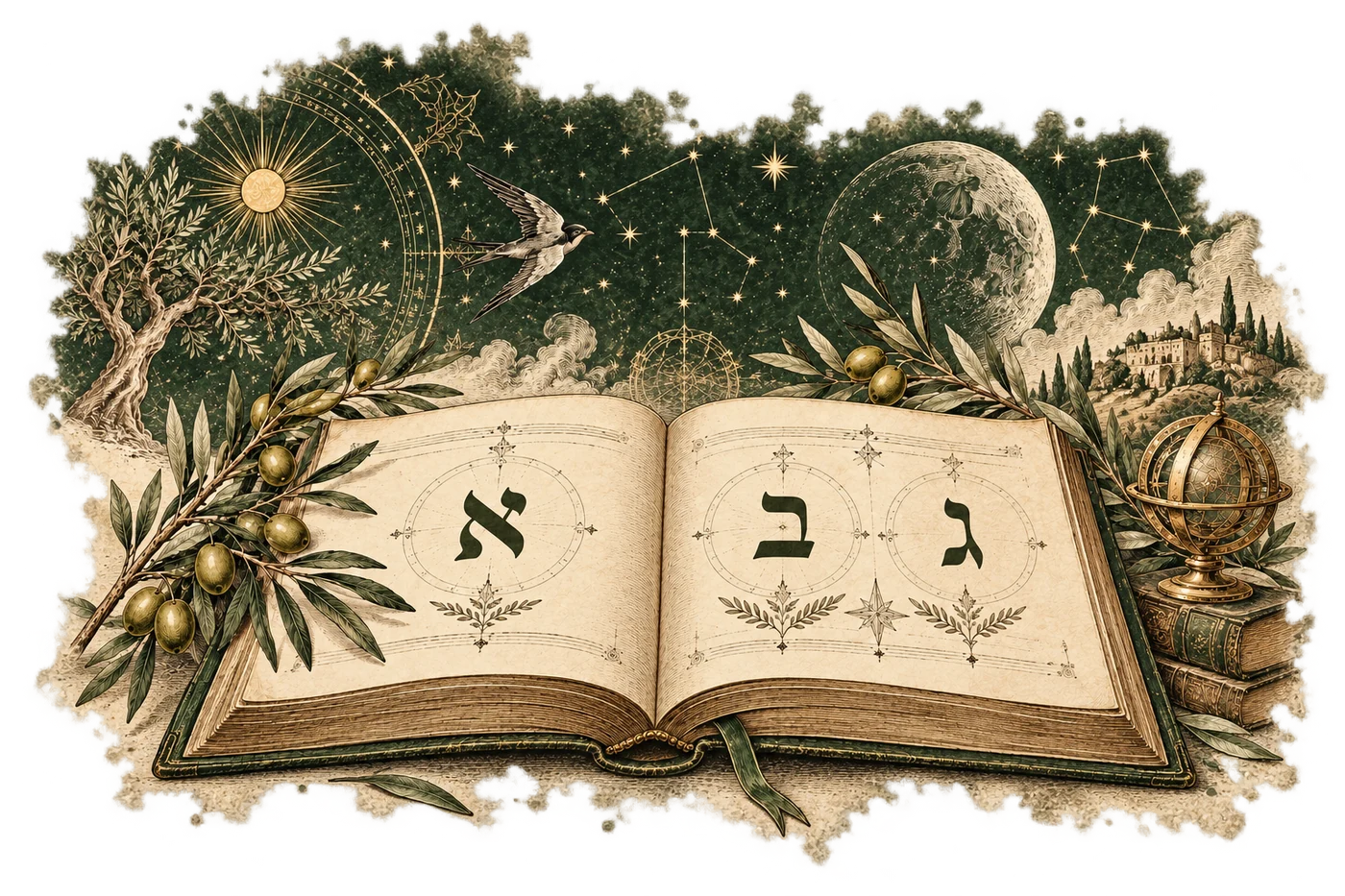
Chai, חי, is the Hebrew word associated with life. In standard gematria, Chet, ח, has value 8 and Yod, י, has value 10. The sum is 18. That simple calculation explains why a gift or charitable donation of 18, 36, 54 or another multiple of 18 can carry a wish for life in Jewish practice.
The word gives the number its cultural meaning. A bare 18 on a receipt does not explain the custom, while the letters חי make the association visible. If you are teaching it to a child or introducing it to a friend, begin with the written word. Identify Chet on the right and Yod on the left, then calculate 8 + 10 together.
Check the two letters separately: Chet and its value of 8 and Yod and its value of 10.
Source notes: Yehuda Shurpin · Chai: Why Do Jews Give in Multiples of 18? · Chabad · The Hebrew Alphabet
A multiple of 18 carries a message
A multiple repeats the symbolic unit: 36 is twice 18, and 54 is three times 18. Yehuda Shurpin’s explanation describes the practice as a symbolic blessing for giver and recipient. This helps explain an amount that might otherwise seem oddly specific. It is a way to put a wish into the form of a gift.
A short note can make that meaning easier to receive: “A gift of 36, with wishes for life and joy.” The message can matter especially when the recipient does not know the custom. You need not add an elaborate numerical interpretation. The straightforward connection between the Hebrew word and the sum is enough to explain the gesture.
Source notes: Yehuda Shurpin · Chai: Why Do Jews Give in Multiples of 18?
Keep the history modest and traceable
The exact beginning of this giving custom is uncertain. Shurpin’s article explicitly says that its place and time of origin are unclear, while noting examples involving the Baal Shem Tov in the eighteenth century. An example of an established practice is useful evidence; it is not proof that the person in the example invented it.
This is a good general rule for reading accounts of Jewish customs. Separate the earliest example you have found from a claim about the absolute first occurrence. When passing the story along, say that the practice has documented traditional examples and that its origin is uncertain. That preserves the interest of the history without giving a familiar custom a more precise birthday than the evidence supports.
Source notes: Yehuda Shurpin · Chai: Why Do Jews Give in Multiples of 18?
Let the amount serve the person receiving it
The symbol can guide a gesture, while the recipient’s needs determine what makes it helpful. Shurpin’s essay ends by emphasizing giving itself and notes that other increments were also advised in particular circumstances. A gift does not lose its kindness because its amount is not divisible by 18. The symbolic arithmetic accompanies the act; it does not replace its purpose.
For example, if you have decided to give 20, there is no reason to reduce the gift to 18 merely to produce the familiar multiple. You could include the wish for life in your note and keep the fuller amount. Likewise, a practical gift, a prepared meal or time spent helping someone can express the same intention in a form suited to that person.
Source notes: Yehuda Shurpin · Chai: Why Do Jews Give in Multiples of 18?
Read life as a responsibility as well as a wish
Deuteronomy 30:19–20 presents choosing life within a passage about covenant, love and attention to God’s commandments. It is a primary text about how life is lived. The passage does not explain the later giving-in-18s custom, so it should not be presented as its historical origin. It offers a separate textual conversation about the weight of the word life.
A contemporary reflection can draw a practical question from that conversation: what helps another person live with greater dignity today? That question might direct your attention to dependable assistance, patient listening or an ordinary promise kept. State that this is your reflection on the passage. The source, the later custom and the present-day exercise each deserve a clear place in the discussion.
Source notes: Deuteronomy · 30:19–20
Keep the word larger than the number
Seeing 18 repeatedly does not establish a message about future events. Nor does a birthday on the eighteenth or a name total of 18 make someone more alive, fortunate or worthy than another person. The cultural association is meaningful because people use it to express something. It is not a measurement of the people who encounter it.
When you notice the symbol, return to an actual relationship or action. Who are you celebrating? What do you wish for them? What would make the gift useful? Those questions keep the arithmetic connected to its human setting. A small number can carry a generous intention, and the intention becomes clearer when it leads to attention, care and a gesture the recipient can recognize.