Mazalogy · Kabbalah source atlas
Sefirot in Patach Eliyahu
Find the ten sefirot’s body metaphors in Patach Eliyahu. Read a short Aramaic expression, its English lookup gloss and the exact source.
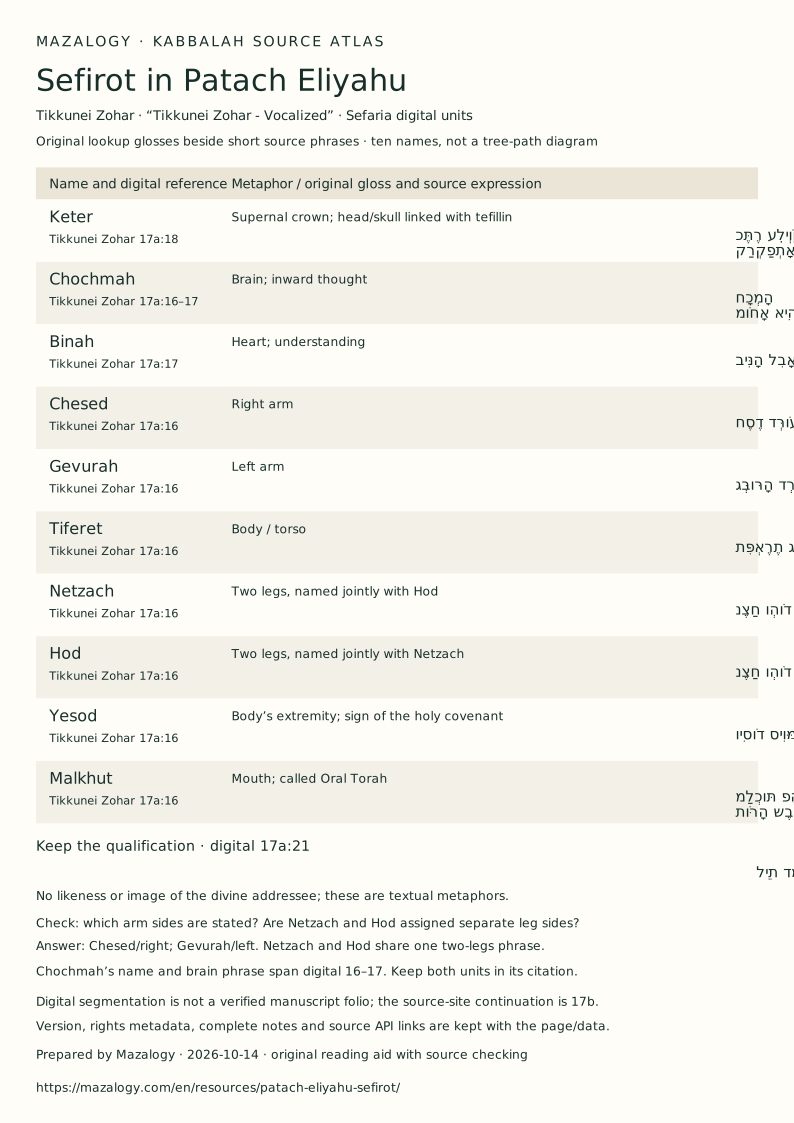
Read the metaphors with this qualification
לֵית דִּמְיוֹן וְלֵית דִּיוֹקְנָא
Tikkunei Zohar 17a:21 · selected version
The divine addressee is said to have no likeness or image, inwardly or outwardly. Read the body metaphors with this qualification; the reading aid depicts textual vocabulary, not a bodily image of God.
Ten names · one named digital witness
Find the words in the passage
Choose a name to inspect its short Aramaic expression, original lookup gloss and precise digital reference. Netzach and Hod share one paired phrase; Chochmah spans two digital units.
Tikkunei Zohar - Vocalized · digital 17a:16–18, qualification 21
Source lookup · 01 / 10
כתר Keter
Also written: Kether
כֶּתֶר עִִלְיוֹן
Digital 17a:18 · short source expression
קַרְקַפְתָּא דִתְּפִלֵּי
Digital 17a:18 · short source expression
The unit uses both crown and head/skull language. Retain the tefillin expression with the citation; a modern explanation of the tefillin box is a further interpretive layer.
Source lookup · 02 / 10
חכמה Chochmah
Also written: Chokhmah, Hokhmah, Hochmah
חָכְמָה
Digital 17a:16 · short source expression
מוֹחָא אִיהוּ מַחֲשָׁבָה מִלְּגָו
Digital 17a:17 · short source expression
In this digital witness the name ends unit 16 and its brain/thought phrase begins unit 17. Read across that boundary. These words do not assign a right brain hemisphere.
Source lookup · 03 / 10
בינה Binah
Also written: Bina
בִּינָה לִבָּא וּבָהּ הַלֵּב מֵבִין
Digital 17a:17 · short source expression
The heart wording is explicit here, alongside understanding. A physiological account of cognition or a left brain assignment is not supplied by this source phrase.
Source lookup · 04 / 10
חסד Chesed
Also written: Hesed
חֶסֶד דְּרוֹעָא יְמִינָא
Digital 17a:16 · short source expression
Right is stated in the arm phrase. Compare it with Gevurah in the same unit before interpreting the pair.
Source lookup · 05 / 10
גבורה Gevurah
Also written: Gevura, Geburah
גְּבוּרָה דְרוֹעָא שְׂמָאלָא
Digital 17a:16 · short source expression
Left is stated in this arm phrase. The atlas records the named textual pairing; it does not assign a trait or bodily condition to a reader.
Source lookup · 06 / 10
תפארת Tiferet
Also written: Tifereth, Tiphereth
תִּפְאֶרֶת גּוּפָא
Digital 17a:16 · short source expression
The source noun is body; torso is a concise contextual cue within this sequence of body terms. No set of numbered diagram paths is specified by these words.
Source lookup · 07 / 10
נצח Netzach
Also written: Netsach, Netsah
נֶצַח וְהוֹד תְּרֵין שׁוֹקִין
Digital 17a:16 · short source expression
Netzach and Hod share one paired phrase. This unit does not individually name Netzach as the right or left leg.
Source lookup · 08 / 10
הוד Hod
נֶצַח וְהוֹד תְּרֵין שׁוֹקִין
Digital 17a:16 · short source expression
This is the same joint source phrase shown for Netzach, rather than a second independent side assignment. Preserve both names when making a citation.
Source lookup · 09 / 10
יסוד Yesod
Also written: Yessod
וִיסוֹד סִיּוּמָא דְגוּפָא אוֹת בְּרִית קֹדֶשׁ
Digital 17a:16 · short source expression
The unit joins the body’s ending or extremity to covenant language. Keep both parts of the phrase; the everyday meaning of foundation does not replace this passage.
Source lookup · 10 / 10
מלכות Malkhut
Also written: Malchut, Malkuth, Malchus
מַלְכוּת פֶּה
Digital 17a:16 · short source expression
תּוֹרָה שֶׁבְּעַל פֶּה קָרִינָן לֵיהּ
Digital 17a:16 · short source expression
The mouth expression is followed by an Oral Torah designation. This context matters when a chart shortens the entry to a single body part.
A worked reading
Read an explicit pair before adding a side
In digital unit 16, locate Chesed and Gevurah. Their phrases separately name the right and left arms. A concise note can therefore record two names, two stated sides, the work, the selected Vocalized version and unit 16.
In the same unit, locate Netzach and Hod. Both names occur in one expression for two legs. A faithful note keeps the pair together; it does not borrow a right/left allocation from another diagram. This difference is visible in the source wording itself.
Build a source note that another reader can check
- Record the chosen version and find the two separate arm expressions in unit 16. Which sides are actually stated?
- Find the joint Netzach–Hod expression. Can this unit alone identify which name is the right leg?
- Find Chochmah and its brain phrase. Which digital units must your citation include?
- Locate the no-likeness qualification. What limit should stay beside an original visual reading aid?
Check the wording and its limits
Unit 16 separately states Chesed/right arm and Gevurah/left arm. It names Netzach and Hod jointly as two legs, so an individual right-leg assignment is not established by this unit.
In the selected Vocalized witness, Chochmah ends unit 16 and its brain/thought expression begins unit 17: cite 17a:16–17. Digital unit 21 denies likeness or image of the divine addressee. Preserve that qualification with the study map.
Read an expression, then preserve its context
Use the name, its short source expression and its exact digital reference together. The English cues are Mazalogy’s original glosses for lookup, not a complete translation or an explanation of every Kabbalistic system. Open the selected-version API when checking the precise witness.
Names are listed in a familiar lookup order. The passage itself places the arm, body, leg, covenant and mouth expressions before the brain, heart and crown material. A reading aid may arrange these words for navigation; that arrangement is editorial and supplies no historical diagram edges.
Read what is explicit before supplying a familiar chart. Chesed and Gevurah receive separate right and left arm expressions. Netzach and Hod receive a joint two-legs expression without separate sides. Chochmah crosses the displayed boundary between units 16 and 17.
Return to the no-likeness qualification in digital unit 21. The source uses body and tree language while denying a likeness or image of its divine addressee. The atlas supports reading religious imagery; it supplies no diagnosis, personality assessment or scientific model of the body.
The Gra letter comparison follows planetary letters in another named text. Keep each work’s vocabulary and reference with its own source note.
The digital witness behind this atlas
- Work and selected title
- Tikkunei Zohar · Tikkunei Zohar - Vocalized תיקוני הזוהר - מהדורה מנוקדת
- Language and script
- The source is written in Hebrew script, predominantly in Aramaic. Sefaria catalogs this digital version with language and actualLanguage he.
- Source check
- Version selection
- Human reader links locate the digital unit and select Hebrew display. They do not pin an immutable default edition. The API links request the exact named version using the documented singular version parameter.
- Digital units and foliation
- References here identify Sefaria’s digital units. In the linked Torat Emet text, the body-language material stands under the 17a heading, while the continuation containing the no-likeness qualification stands under 17b. The atlas does not assert a verified physical-folio boundary or a manuscript transcription.
- Rights metadata
- Sefaria labels the selected source version Public Domain. Its linked Torat Emet website also displays a generic all-rights-reserved notice. This resource records those notices separately, uses only short source tokens with original explanations, and grants no rights over scans, complete digital editions or modern translations.
- Tikkunei Zohar · digital 17a:16–18 · selected Vocalized version
- Tikkunei Zohar · digital 17a:21 · no-likeness qualification
- Torat Emet · the linked source edition and its page headings
- Sefaria · Texts v3: exact version selection and response metadata
- Chabad · Patach Eliyahu, translation and commentary by Avraham Sutton
Prepared by Mazalogy with AI assistance and direct checking of the cited source responses. The lookup order, English glosses, reading aid and exercises are original editorial work. No qualified scholarly or native-language review is claimed.
Keep a reproducible reference
The sheet and data file retain all ten terms, the named version, the joint and split expressions, and the no-likeness qualification. Use the full page when sharing the reading.